

When the School Returns to the Heart of the Community

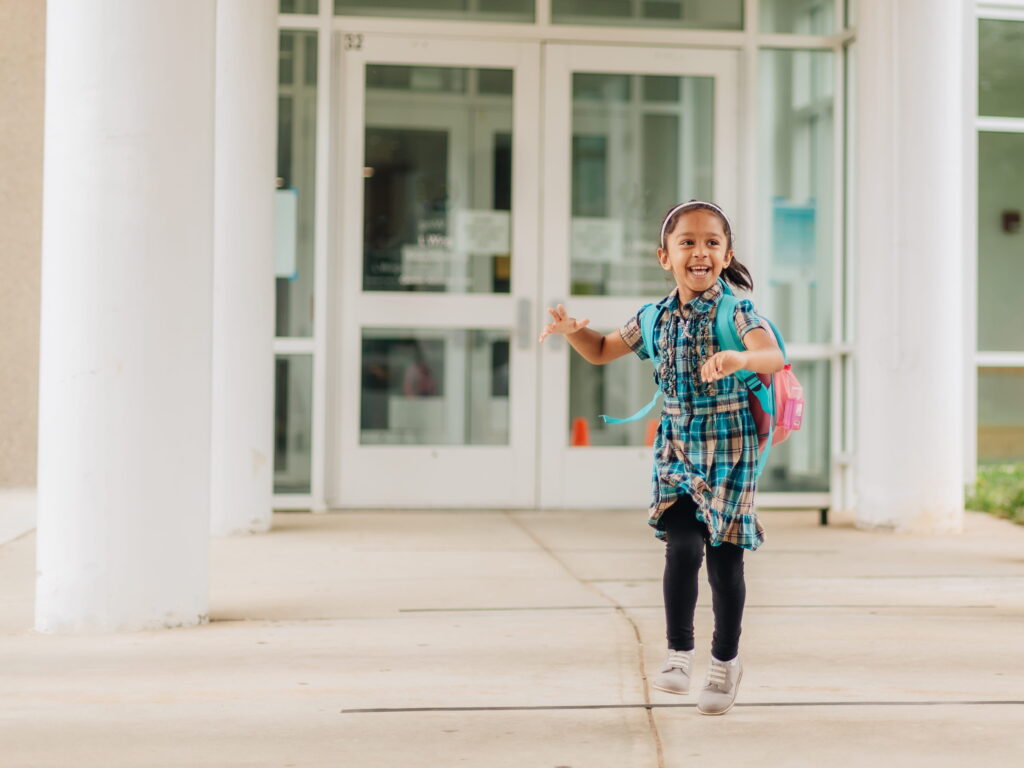
A student enters the classroom carrying not only a backpack, but also an invisible weight of anxiety on their shoulders. Their gaze is distracted, their voice unusually loud or perhaps completely silent. Anger erupts over the smallest triggers, or they withdraw to the back rows to avoid any interaction.
In this scene, repeated daily in our schools, a simple question arises:
Is what we see inside the classroom truly a school-related problem? Or has the school become a mirror reflecting what happens beyond its walls?

School Violence as a Societal Mirror

Violence within schools is not merely an individual behavior or the result of fleeting misconduct. It is often a condensed reflection of what a child experiences in their broader environment: at home, in the neighborhood, and within the community.
The weaker the social bonds outside the school, the more a student’s ability to interact in a healthy manner inside it declines.

When a student finds no one who listens to them at home, and no one who contains their emotions in their community, the school becomes a space for releasing pressure rather than absorbing it.

Thus, instead of being a safe environment, the school sometimes turns into an extension of scenes of anxiety, violence, and alienation.

What Is Missing from the School?

Despite the considerable efforts made by school administrations, teachers, and educators, the school often remains confined between curricula, examinations, and disciplinary measures.
What is truly missing, however, is a safe space to understand behavior rather than punish it, to listen instead of reprimand, and to contain rather than exclude.

When teachers are expected to be educators, psychological counselors, and administrative coordinators – without being supported themselves- the pressure becomes overwhelming, and educational intentions are lost amid the noise of overcrowded classrooms.

When discussions of violence are limited to reactions such as “hitting, verbal abuse, vandalism,” deeper roots are ignored: anxiety, anger, and the loss of a sense of belonging.
Schools need a framework that recognizes violent behaviors not as mere “defiance,” but as muted cries of pain.

Rehabilitating the relationship between students and school cannot be achieved through punishment, but through understanding, support, and changing the context that produces such behaviors.

School and Community: An Absent and Marginalized Relationship

Schools are often treated as entities separate from their social surroundings, as if they were isolated islands within a neighborhood. Yet the truth is that schools cannot fulfill their educational role without opening themselves to the surrounding community.

Parents, associations, municipalities, cultural centers, and neighborhood leaders all possess capacities, skills, and experiences that can support schools and expand their impact. These connections, however, are frequently neglected or reduced to brief meetings or formal invitations that fail to build genuine trust.

When school doors open to the community, the school transforms from a place of instruction alone into a space of education, care, and belonging. A local farmer can help students cultivate a school garden; an artist can paint a mural with them about their dreams; a mother can share her experience of returning to learning later in life. In this way, the school becomes an extension of life rather than a break from it.

How Do We Return the School to the Heart of the Community?

This does not require massive projects or extensive funding. Often, meaningful change begins with simple steps:

Allocating a weekly open hour for community engagement;
Forming a local committee of parents, teachers, and students;
Opening school facilities for artistic and sports activities beyond school hours;
Inviting neighbors to participate in workshops and educational events.

These are not merely pleasant initiatives, but a genuine transformation of the school’s function. When children feel that school is not only a place for studying but also a place for life, violence decreases, motivation to learn increases, and education returns to its core purpose: building the human being.

The School as a Small Community Capable of Prevention

When a school succeeds in building a supportive network of relationships within it, it becomes more than a place of instruction; it becomes a small community that generates resilience and positive influence.
This resilience is not created through punishment or strict regulations, but through:
daily human connections between students and teachers;
a sense of belonging felt when a child is called by name and their opinion is heard;
opportunities for expression, leadership, and participation, however modest.
A school that is psychologically and socially safe becomes resilient against violence and capable of strengthening the social fabric. It raises generations able to endure, to listen, and to build healthy relationships at home, in the neighborhood, and in society.

From this understanding emerges the “My School, My Community” program, which redefines the school not merely as a place of learning, but as a central anchor for rebuilding the social fabric. The program is grounded in a deep understanding that confronting violence cannot be achieved through momentary solutions, but through building and creating a supportive environment in which all components of the community participate: parents, educational staff, students, and the neighborhood.

The program focuses on three interconnected levels:


Students’ Psychological Resilience
Through structured training in emotional expression, active listening, conflict resolution, self-regulation, and related skills, the program aims to provide students with tools for communication, leadership, and responsibility.


Empowering the Educational Staff
Teachers are provided with professional and psychological support that strengthens their personal resilience and stability within the educational system, in addition to developing communication tools that enable them to build constructive relationships with students and parents.


Parental Engagement and Building Belonging
Transformation cannot be complete without reconnecting the school with the home and the neighborhood. Through dialogue sessions between parents and teachers, the program creates an ongoing communication channel that rebuilds trust among all parties, directly influencing students’ behavior and their sense of safety.

“My School, My Community” does not offer magical solutions. Rather, it invests in building change from within—by reshaping relationships, restoring belonging, and fostering individual and collective resilience that enables addressing the roots of violence, not merely its symptoms.


Returning the School to the Heart of the Community

In a time of mounting crises, schools cannot remain merely classrooms and curricula. The “My School, My Community” program redefines their role: as a safety net, a space for connection, and a platform for change. When we reconnect the school with the community, we grant our children not only the right to education, but also a sense of safety and belonging—of being seen, heard, and capable of becoming active participants in their society.

Blogs

You Might Also Like

When the School Returns to the Heart of the Community

When the School Returns to the Heart of the Community

When the School Returns to the Heart of the Community A student enters the classroom carrying not only a backpack, but also an invisible weight of anxiety on their shoulders. Their gaze is distracted, their voice unusually loud or perhaps completely silent. Anger erupts over the smallest triggers, or they withdraw to the back rows…

Community Leadership From Inside the Home

Community Leadership From Inside the Home

Community Leadership From Inside the Home When we hear the word leadership, images of public figures, formal meetings, slogans, or media statements often come to mind. But there’s another kind of leadership — one with no banners and no cameras.   A leadership that begins in a modest kitchen, in a quiet conversation with a…